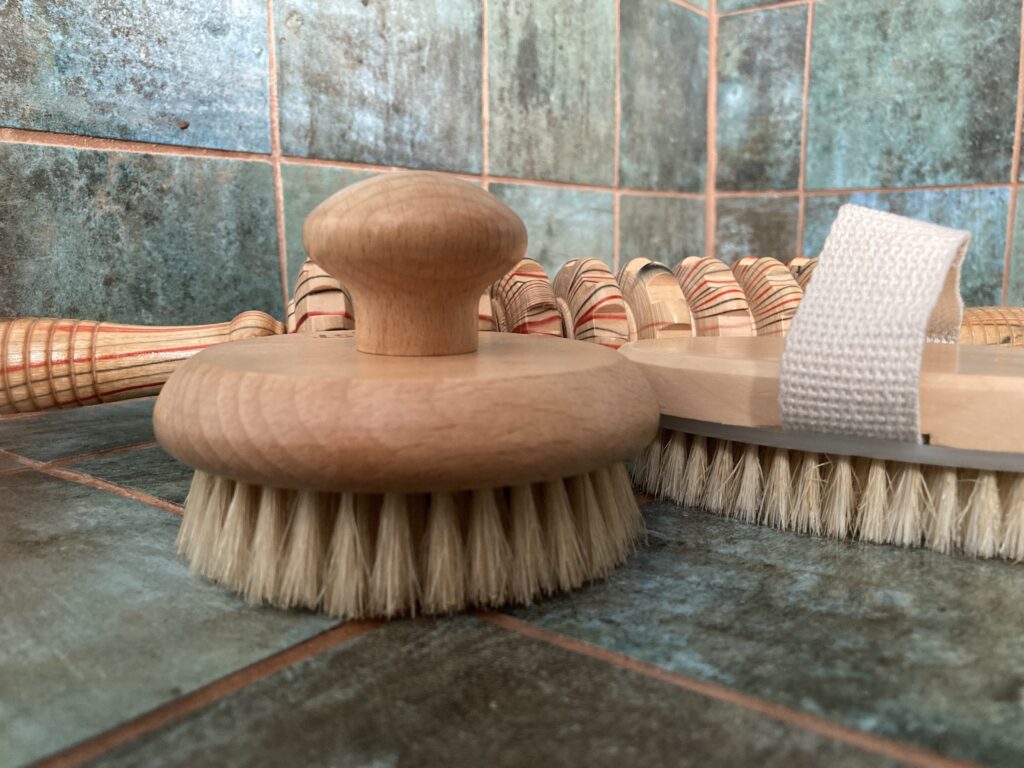
Dry brushing is a simple yet powerful ritual that has stood the test of time. Rooted in Ayurvedic practices and now embraced worldwide for its rejuvenating effects, dry brushing is much more than skin deep—it supports detoxification, improves circulation, and boosts your overall sense of wellbeing.
At Halfanjas, we love rituals that connect you to your body and nature. Dry brushing is one of those small daily acts that creates space for mindfulness and self-care, while enhancing your health in visible and invisible ways.
Why Dry Brushing?
Dry brushing stimulates the lymphatic system, which is responsible for clearing toxins and waste from the body. When the lymph is stagnant, it can lead to fatigue, dull skin, and lowered immunity. A few minutes of brushing can give your body the boost it needs to stay clear, light and energized.
Here are some of the top benefits:
- Lymphatic drainage: Supports natural detox by encouraging movement of lymph.
- Exfoliation: Removes dead skin cells for smoother, more radiant skin.
- Increased circulation: Brings fresh oxygen and nutrients to the skin’s surface.
- Cellulite support: Over time, may reduce the appearance of cellulite by breaking up stagnant fat deposits.
- Energizing: Invigorates both body and mind—many report feeling awake and refreshed afterward.
How to Dry Brush
All you need is a natural bristle brush with a long handle to reach your back. Choose a brush that’s firm but not scratchy.
Steps:
- Start at the feet, brushing upward in long, sweeping strokes toward the heart.
- Move to the legs, thighs, and buttocks, continuing upward motions.
- Brush from hands to shoulders in long strokes.
- Use circular motions on joints like knees and elbows.
- Brush your abdomen and chest gently in clockwise circles.
- Always avoid broken or irritated skin, sunburn, or varicose veins.
After brushing, shower to wash off exfoliated skin. Follow with a nourishing body oil—like sesame or almond oil—especially one warmed slightly for deeper absorption.
When to Dry Brush
- Best time: In the morning before showering. It’s invigorating and gets your energy flowing for the day ahead.
- How often: 3 to 5 times a week is ideal for most people. Daily brushing can be beneficial if your skin tolerates it well.
- Ayurvedic tip: Incorporate dry brushing into your dinacharya (daily ritual), followed by abhyanga (self-massage with warm oil) to deeply nourish the tissues.
Dry Brushing and the Doshas
According to Ayurveda:
- Kapha types benefit the most—dry brushing helps break up stagnation, lethargy and heaviness.
- Vata types should brush gently and always follow with oil massage to avoid dryness.
- Pitta types should use a soft brush and avoid overbrushing sensitive areas to prevent irritation.
Conclusion
Dry brushing is an easy, affordable, and ancient practice that brings new life to your skin and supports your body’s natural cleansing. It’s a moment of care you gift yourself each day—a reminder that wellness starts from the surface but flows deep within.
Try it this week and feel the difference for yourself.
Discover more Ayurvedic wellness rituals at Halfanjas.com
Follow us on Instagram @halfanjas for daily inspiration in plant-based, seasonal, and mindful living.
Leave a Reply